 Hire Me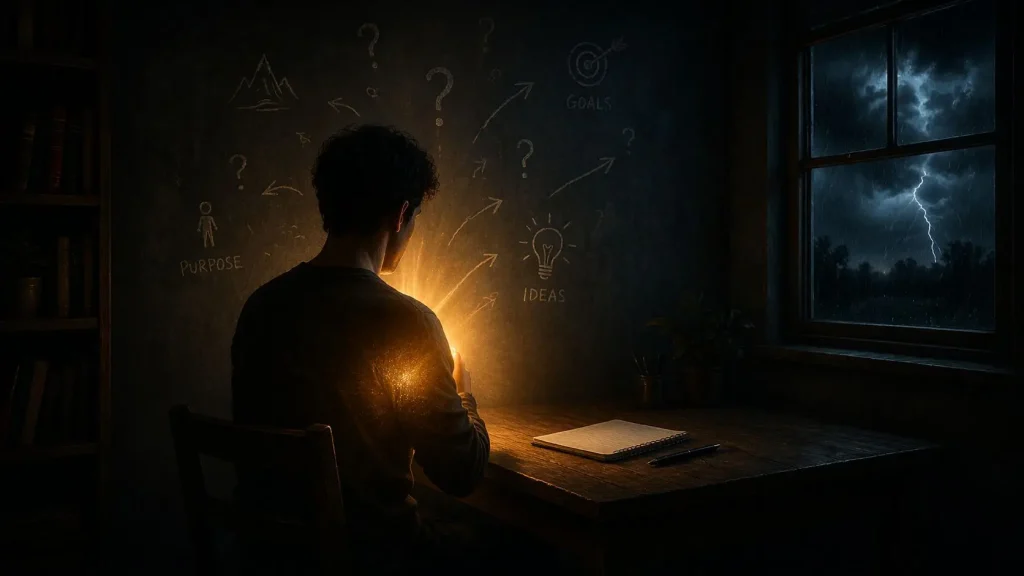
Hello.
In normal circumstances, I don’t fully appreciate the value of hope. When life is reasonable and seemingly “normal,” I take hope and its drive for granted. But hope can be our most important engine moving us forward – the will to live in this difficult and unpredictable world.
The real question for me was: what is hope, and where does it come from?
What Is Hope?
Everyone defines a phenomenon differently. In my view, simple questions are often more important than complex ones – the ones we think we already know the answer to. But do we really?
Asking Simple Questions
Before writing about hope, I want to talk about asking simple questions. I learned this from Socrates: ask simple but deep questions.
In Plato’s dialogue Laches, Socrates asks a famous Athenian general named Laches to define “courage.” Laches, who considers himself a brave man, answers confidently at first. But as Socrates keeps questioning, his definition falls apart. He finally realizes he cannot properly say what courage is. His silence in the face of such a simple question shows that knowing something is different from being able to define it.
This story made me take a closer look at the seemingly simple aspects of life – to search for meaning in simplicity and even in clichés I once thought were illusions.
The Seemingly Simple Question: What Is Hope?
For me, hope is an internal concept shaped by our attitude toward life. It is something we create or destroy inside ourselves, through our values and our unique perspective.
In conceptual engineering, there is a principle: to understand the function of a component in a system, you remove it and observe the changes. That’s how you realize its importance and role.
What Does Life Look Like Without Hope?
To understand the value of hope, it helps to look at its absence.
Depending on our lived experience, each of us has countless images of hopelessness. The feelings that arise when hope is absent are painful and universally relatable.
There are moments when we have no hope, and voices inside our heads repeat things like: “Life is worthless,” “I am inadequate and useless,” “It would be better if I didn’t exist,” “Life can’t get worse than this,” “I am the unluckiest person in the world” – and thousands of similar thoughts.
These feelings show how important hope is. Without hope, we have almost nothing to use as a shield against life’s hardships. Without hope, we are dead people just going through the motions.
For me, that’s enough to know that without hope we are disarmed – we cannot use our inner strengths. We cannot build anything or find a value worth fighting for.
I have had countless moments of hopelessness in my life. My experience tells me that hope is even more vital than the food I eat every day – even if I sometimes don’t realize how much I need it.
Where Does Hope Belong?
In my view, hope is an internal phenomenon that originates from within a person. I cannot deny the impact of environment, but I believe the dominant source of drive and hope is internal.
One reason for this view is Viktor Frankl’s famous book Man’s Search for Meaning. Frankl, an Austrian psychiatrist, concluded from his experience in Nazi concentration camps: “Everything can be taken from a man but one thing: the last of the human freedoms – to choose one’s attitude in any given set of circumstances, to choose one’s own way.” In the midst of complete darkness, he managed to build hope for himself.
Let’s admit it: I have an introverted bias – maybe because of my personality. Philosophy, religion, and culture have repeatedly told us that our inner world matters and that everything originates from within. I largely agree with this, and I try to find my own share in life’s events and focus on that.
Environment and circumstances certainly matter, but the wisest approach is to focus on the part we can control – and that controllable part is inside us. (Though we don’t have complete control; only a certain share of it.)
How to Build Hope Instead of Searching for It
With these definitions, we reach the most important part: given all this theory, what can we actually do?
Personally, the recent hardships – inflation, job loss, loss of income, war, social issues – have been so overwhelming that they forced me to dig deeper into myself and struggle with myself just to stay alive under pressure.
Let me explain the path I took. It might clarify how my view of hope changed.
A Few Personal Definitions (To Clarify the Path)
Life is hard. Really hard.
Social media, schools, governments, some books, TV – in short, our environment – constantly gives us an unrealistically bright image of life. They try to highlight only the bright side, making us ignore the dark. I think the root of this noise is in human nature’s tendency toward optimism.
For example, a success story of an athlete or writer is usually more appealing to us than the story of a researcher or entrepreneur’s failures. Media surrounds us with success stories and pays less attention to failures.
But the world is not only darkness and losing, nor only brightness and winning. A combination of both is more realistic. Just as I’ve had good luck in life, I’ve also had bad luck.
So: life can always be worse than it is, and it can also be better. That doesn’t mean life is inherently good or bad. It simply exists. Many times, labeling life’s events as “good” or “bad” is a mistake. It’s more accurate to say: it just exists.
Inside our inner world, we are alone with our failures and victories, our strengths and weaknesses. Understanding that we need to judge life with both its dark and light sides can be helpful.
How Much Control Do We Have Over Life? (On Determinism and Free Will – But Not Too Heavy)
The debate about determinism has always been there. Let me be clear: I accept my share of agency, however small, and that’s why I’m writing this article right now.
But we cannot deny the impact of determinism either. Where we were born, our family, friends, genes, the books we’ve read – all of that is determined. I constantly look for points where I have agency and control, and try to focus on those.
Important point: don’t take everything personally. We are not the only factor in our lives. Life is full of countless variables. By accepting that some things are outside our control, we can stop blaming ourselves for them. We are not responsible for everything in our lives. We cannot control society or governments.
Finding Points of Agency Builds Hope
My experience tells me that whenever I accepted life and found my share of agency, I felt better – even when my environment was unfavorable.
In the midst of this suffering, I pursued only one goal: try to build hope and stay alive.
To be more practical, I made a list of the controllable points in my life:
- Keep learning
- Write and understand myself
- Work on projects I’ve always loved
- Read
- Explore the idea of a new store
But Wait… Weren’t You Hopeless?
You might ask, “Those things sound like you had hope. Weren’t you hopeless?”
Here’s my answer – and the golden point of this article:
Action first, then hope.
Yes. At first, I wasn’t working on those things. I wasn’t even close. So how did I find the hope to focus on these ideas?
I realized a simple truth: hope comes from action. Hope does not necessarily lead to action.
That’s the key takeaway. To stay hopeful and keep going, I started first, and then became hopeful. We forget this simple point: action‑orientation gives us more motivation to live, not the other way around. I used to think I had to be hopeful and motivated first to do anything. Now I have a better approach: action has a much stronger effect on creating hope.
Bear the Difficulty of the First Step – The Rest Becomes Easier
Starting things that are within our control – when life is discouraging and hard – is not easy. In the first step, you have to tolerate that difficulty. Overcome that initial inertia, knowing that you are simultaneously growing hope within yourself. With small, imperfect starts, time will work in your favor, and motivation and hope will strengthen.
This doesn’t mean pain disappears. It doesn’t mean this is easy. It’s a method, a technique that helps us find our share and continue living with hope.
And Hope Exists
Hope is vital, magnificent, and deeply human. A concept woven into the fabric of our existence. Life without it is impossible. To stay alive, we need air, water, food – and hope.
I don’t see myself as an overly positive or merely hopeful person. I’m not a cheerful person either. I’m usually immersed in my inner world. But over time I’ve learned that I can build hope for myself while still facing heavy thoughts. The art of living, I think, is to take awareness of hardships as a tool for deeper understanding in one hand, and hope as a shield in the other, and keep going.
Finally
Finding the meaning of life and understanding it is not simple. What I’ve written here might seem oversimplified, but I believe in one thing:
Some things are simple, but not easy.
Like Socrates’ questions, like rousing ourselves to hope and to live, like building routines of the things we love. There is no magic formula for cheerfulness and hope. The mundane, the dullness of the world – that is exactly where all these concepts live. From within that very mundanity, the seed of life and hope grows through action.
I wish hope for you. Not the hope that waits for a miracle, but the hope that starts with one small action today. I hope this has been useful.
Footnote on references: Viktor Frankl’s quote about “the last of the human freedoms” is taken directly from his book. The story of Socrates and Laches, recorded in Plato’s dialogue Laches, is one of the most famous examples of the Socratic method of questioning seemingly simple concepts. As for the phrase “Action first, then hope” – that is my own personal insight, not a quote from any specific source. Interestingly, Paulo Coelho has a similar sentiment: “There is only one way to learn. It’s through action. Everything you need to know you have learned through your journey.” Maybe that’s the truth.